DIE HARD III
Herman Tiu Laurel
6/20/2011
A mainstream daily came out with the headline, “PH flexes naval muscle,” with a huge photo of the BRP Humabon, a vintage World War II destroyer escort/frigate that is the only warship of the Philippine Navy. Why it decided to put out such a headline projecting the country’s total incapacity to present a credible naval deterrence is beyond me. Was it for self-ridicule (which it did rather successfully)? Or was it to provoke better armed foreign navies to “pick” on us?
As former US Secretary of State Donald Rumsfeld said of his country’s position in the world when he quit his post in 2006, “Today, it should be clear that not only is weakness provocative, but the perception of weakness on our part can be provocative as well.”
Thus, if you are a Filipino like Junrey Balawing, 23.5 inches in height, adjudged by the Guinness World Records as the shortest living man in the world, and acting menacing by flexing your pea-sized muscle, the neighborhood bully may well be provoked to beat the crap out of you even just for laughs.
Worse, if that pea-sized muscle is tied to a pea-sized brain, as what TV news anchor Noli de Castro exhibited on air a few days ago, then we know we have a really dumbed-down lot in our midst — unless we expose and discard each one in due course.
It was on one of De Castro’s evening programs, where news reporter Willard Cheng presented both sides in the current Spratlys issue in an even-handed and balanced manner, that the anchor followed Cheng’s closing blurb “Willard Cheng reporting for…” with a sarcastic “China ha… Cheng ha…” that oozed with prejudice and innuendo.
The fact that De Castro was installed as vice-president of this country already speaks a lot about our sad state of affairs; but to hear him blabber such nonsense without seemingly gaining a bit of depth from more than six years in high office certainly beats the midget Junrey’s shortness.
A little study of naval ships reveals the limited capabilities of the BRP Humabon, which is a mere escort ship. Compared to our Asean neighbors, the Philippines has fallen a long way off from the time of Marcos when the Philippine Navy was able to present an imposing presence.
I remember that at the height of the Sabah crisis, the Philippine newspapers presented graphic comparisons of Malaysian and Philippine naval assets, and those silhouettes of ships on the Philippine side outnumbered the Malaysian’s significantly.
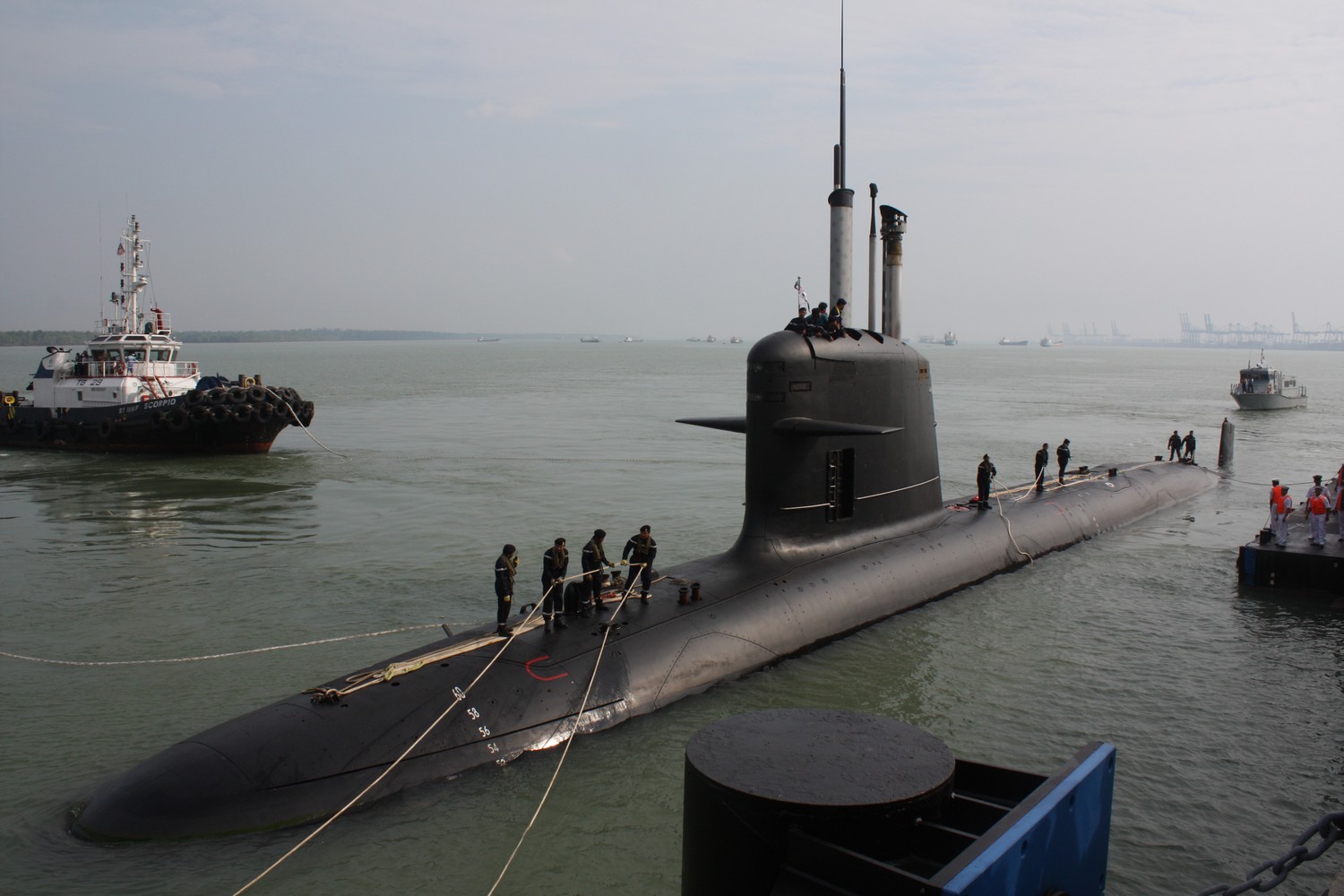
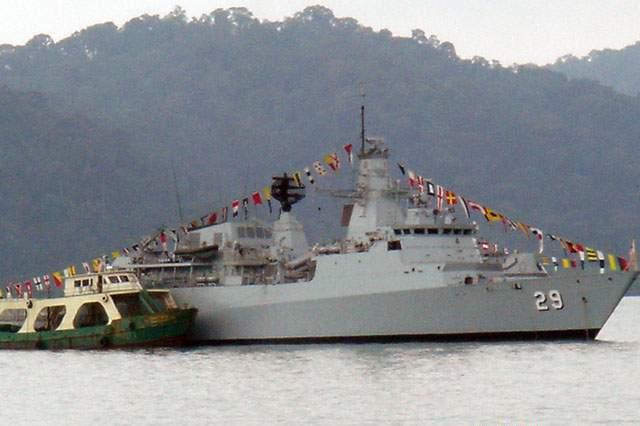
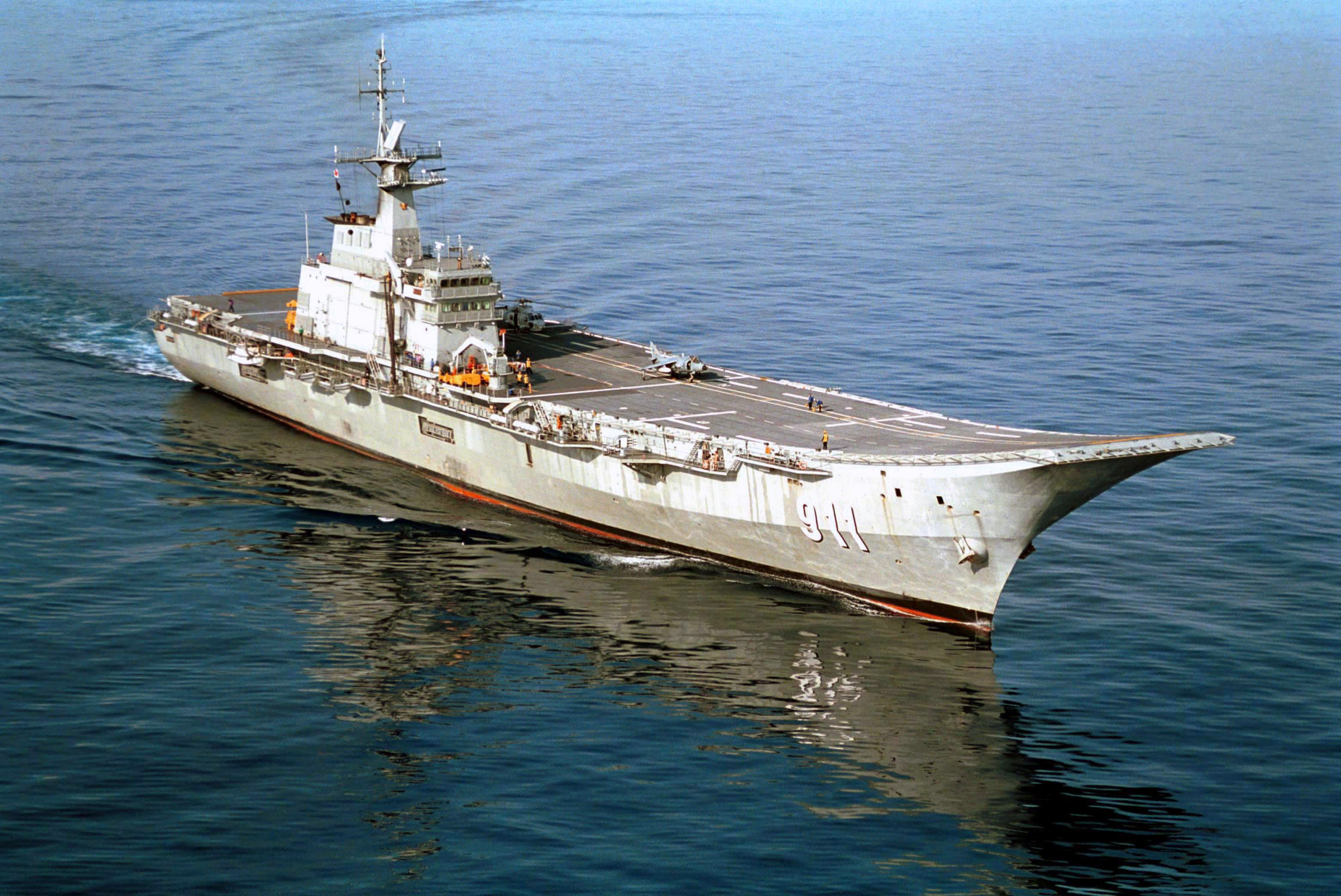
Today, Malaysia has two Scorpène class submarines, two Lekiu class frigates armed with Exocet missiles, two German Kasturi class frigates, plus an anti-submarine helicopter, corvettes, among others. Singapore has two new Swedish-made submarines launched in 2010, augmenting or substituting four Challenger class submarines. Thailand, meanwhile, is now the only Asean country with an aircraft carrier, the Chakri Naruebet.
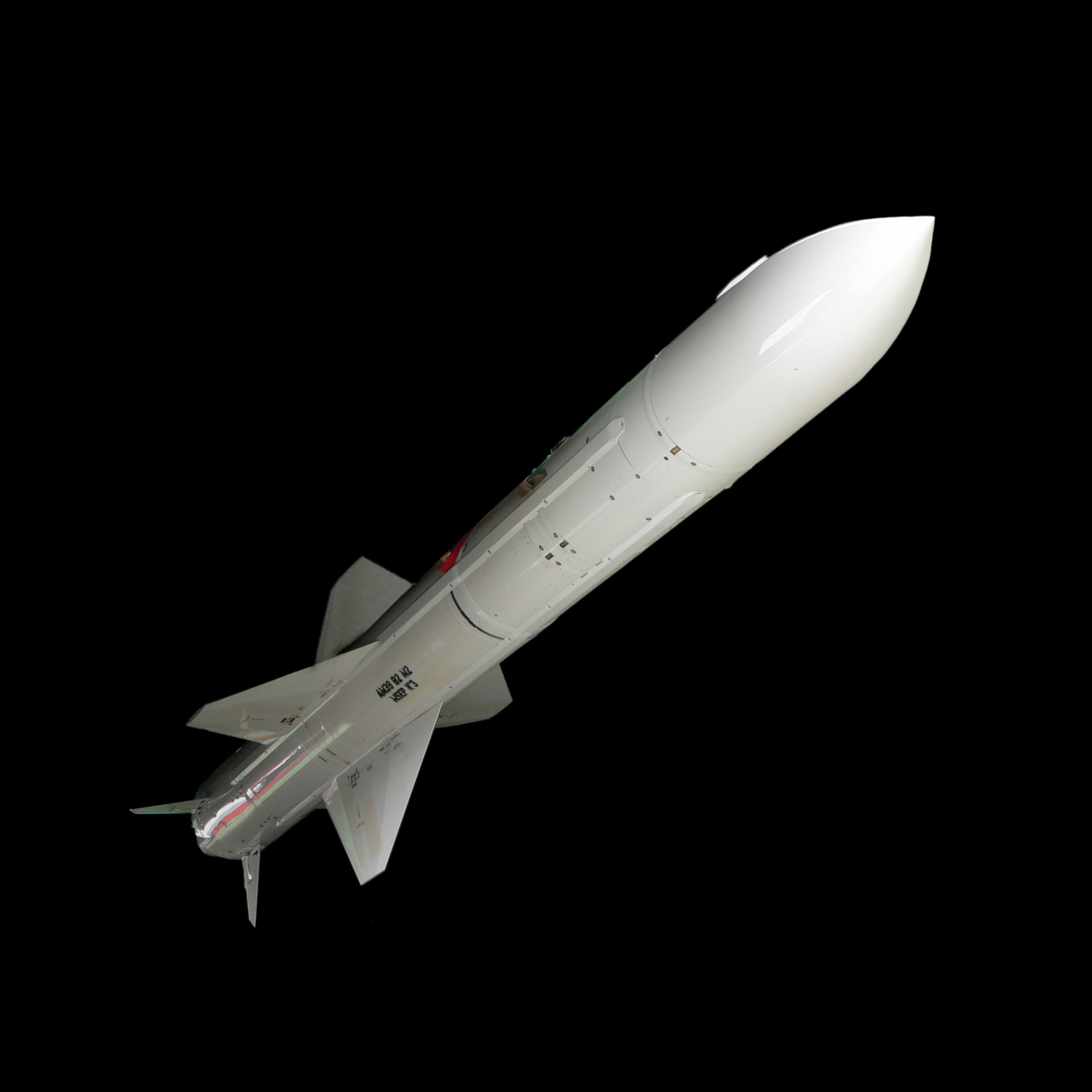
Vietnam has spent $1.5 billion (or P64.5 billion) for 6 “Kilo” class submarines from Russia scheduled for delivery in 2010. By 2015, according to Chinese intelligence, Vietnam will receive from the Russian navy two 11661-type frigates, as well as “Ruby” supersonic anti-ship missiles.
One Chinese view is that since Vietnam neither has nuclear submarines nor “Chinese Aegis” (Ballistic Missile Defense) class destroyers but has “the equipment in the coastal waters (with) anti-ship combat capability… (in the event of any) Sino-Vietnamese naval clashes in the South China Sea,” Vietnam’s occupied territories or facilities may not be lost to the Chinese Navy. In other words, Vietnam is capable of holding its own.
In stark contrast, the only acquisitions the Philippine Navy has made of late are several outmoded Hamilton class cutters which reportedly will be purchased out of the royalty earnings from the Malampaya natural gas production. Yet, these potentially include submarines that can’t resurface after submerging.
Philippine defense policy has always been skewed by a neocolonial, pro-oligarchy orientation. It is anti-insurgency insofar as only protecting the economic holdings of the ruling elite against a rebellious, impoverished people, while neglecting our naval and coastal defenses.
The then Armed Forces of the Philippines was still at its peak under Marcos and was to have been the perfect model for sustaining and expanding our country’s defense capabilities. But instead of building on it, the regimes that followed allowed it to rot. The arms manufacturing that was started during Marcos’ time went to seed while the ship-building facilities, which could have built most of the new naval assets the country needed, were allowed to rust into oblivion.
Our nation’s resource base eroded with the collapse of the “11 Industrial Projects” as well as the loss of Sabah (revenues upon which Malaysia built its wealth and defense capabilities). It will take a new leadership of the patriotic and nationalist kind let the Philippines outgrow its status as the Junrey Balawing of the region.
Should we continue to remain the air-weight of Asia, like Junrey Balawing at five kilos, deserving of a place only in a freaks’ gallery? Are we man or mouse? Are we sheepish slaves or free men?
Any muscle building begins first in the mind and the will. Muscles are built by nutritious food and strength training; hence, the need for national food self-sufficiency and accessibility, to heave against the proverbial Sisyphus-ian rock over the mountain. The will is strengthened by self-consciousness; hence, the need to restore our historical and nationalist education and cultural awareness. The sinews of a national economy are made up of iron and steel, and its blood, the energy industry; hence, our “nation-al” economic and industrial development.
At the top of all this is the set of goals in our consciousness, the ideology that unites all of the energies of our people. While the leadership that can carry this through is not in a position to take charge yet, we must therefore prepare the people’s consciousness for it today.
(Tune in to Radyo OpinYon, Monday to Friday, 5 to 6 p.m., and Sulo ng Pilipino, Monday, Wednesday, and Friday, 6 to 7 p.m. on 1098AM; Talk News TV with HTL, Tuesday, 8 to 9 p.m., with replay at 11 p.m., on GNN, Destiny Cable Channel 8, on “GSIS Union Victory vs Winton’s Outrages”; visit http://newkatipunero.blogspot.com and http://hermantiulaurel.blogspot.com for our articles plus TV and radio archives)

Monday, June 20, 2011





Sunday, June 19, 2011
Resolving the dispute
BACKBENCHER
Rod Kapunan
6/18-19/2011
I guess it would be prudent for the government to pursue a policy that would serve to maintain our status quo in the Spratly islands. That approach in solving our dispute with China is to solve it from the standpoint of realpolitik. Along that line, we have to set aside all legal and historical basis, like citing the proclamation made by President Elpidio Quirino in 1946, for that could only result in endless debate much that China could equally insist its claim dates back to centuries long before the Philippines was colonized by Spain.
Besides, even after Filipino mariner Tomas Cloma claimed to have discovered the islands in 1957, and asserted ownership by calling them Freedom Islands, he however failed to maintain a permanent foothold if only to satisfy the international law requirement of effective physical occupation. On the contrary, it was only in 1971, after President Ferdinand Marcos sent a military outpost, when we managed to satisfy that requirement. President Marcos in fact issued Presidential Decree 1596 on June 11, 1978 formally annexing the Kalayaan Group of Islands in the Spratlys at a time when the thawing in Sino-Philippine relations was at its peak.
Moreover, even if we argue that our claim was well ahead of Vietnam, Brunei, Malaysia, Taiwan, and, mind you, France, it would not help legally bolster our position. In the absence of diplomatic agreement, it is power that would ultimately resolve the dispute, and we do not have the capability to enforce that. This has become evident in the race to occupy all those islets which came about because of the discovery of oil and natural gas deposits.
The presence of those precious resources within the China Sea rim promptly compelled China and the rest to assert their sovereignty, although by geographical proximity Palawan is much closer to the Spratlys to confirm that it is part of the continental shelf connecting the Philippine archipelago to validate our claim under the United Nations Convention on the Law of the Seas.
To be sure, there is no way we can extend our occupation over the rest of the disputed islands. But even if we have a legal as well as historic basis, taking a belligerent stand could only deteriorate an already tense situation for which we do not have the capability to make good on our belligerency.
Neither can we rely on the presence of the US navy to act as our big brother. In fact, our dependence on the US military umbrella has resulted in the redefinition of our strategic position, thereby making our interest subservient to that of the US. So, for us to play the game of brinkmanship is to play Russian roulette for it could trigger a backlash with China possibly evicting us out to the area, and that could be most humiliating.
At the moment while tenuous peace continues to breeze the area, our best option to is to keep open the dialogue for negotiations, and explore the possibility of a joint venture and cooperation. We have to be more realistic for at the rate China is modernizing its armed forces there is no way we could match that. Neither can we relay on the US as our proxy in the event of war, even if we roll ourselves to the ground to emphasize the value of our military alliance with them.
Objectively, there is no way we could influence China to change the course of its foreign policy. But certainly the formula of joint venture and cooperation to harness the resources in the area is most practical for it carries with it an assurance that our presence in some of the islands will be respected. It will also reassure China because for the first time we managed to resolve our dispute with them within the framework of bilateral negotiations without us clinging on to the apron of Uncle Sam.
Notably, the country’s ambivalent position is evident, for while at times we appear to be conciliatory in wanting to peacefully resolve the dispute, often we are mouthing the alarmist and jingoistic drum beatings of the US; that allegedly there have been incursions by the Chinese gunboats, buildup of additional ports, barracks and communication facilities, and even accusing China of buzzing our fishermen and soldiers in the islands.
Such inflammatory statements will not help ease the tension. On the contrary, many believe we are being incited by those war-quenched neo-liberals in Washington who obviously wants to place our position at a most disadvantage, while they continue cultivate their own economic gains with China.
In fact, it is doubtful whether the eagerness of the US in pressuring us to take a hard-line stand would suffice to assure us it would come to our succor in the event of an open conflict. If ever they would act, that would only be in pursuit of their interest which is not exactly parallel to our interest. Even that is doubtful whether the US would risk a war that would exact from it an unimaginable cost, taking into account that China is no Santo Domingo or Nicaragua.
But one thing is clear: the US has no strategic interest in the Spratlys for it to risk a war, except: First, if its naval and commercial ships that navigate the China Sea are attacked. Second, if it sees the possibility that China’s control of the potentially-rich oilfields could strategically jeopardize US industrial and military requirements. In the absence of these two possibilities, it is unlikely for the US to come to our assistance even if we are to invoke our defense pact with the Americans.
Already, the US is inciting Vietnam into antagonizing China by holding a joint military exercise in the area. But underneath that effort to seal an agreement with Vietnam for a joint oil exploration, it hopes that its renewed friendship with that country would help erase from the mind of the Vietnamese people the atrocities committed by US soldiers during the war where more than five million of their compatriots were killed. It is the usual power game of using one to isolate the other which is dangerous for the one being pitted against the other.
(rodkap@yahoo.com.ph)
Rod Kapunan
6/18-19/2011
I guess it would be prudent for the government to pursue a policy that would serve to maintain our status quo in the Spratly islands. That approach in solving our dispute with China is to solve it from the standpoint of realpolitik. Along that line, we have to set aside all legal and historical basis, like citing the proclamation made by President Elpidio Quirino in 1946, for that could only result in endless debate much that China could equally insist its claim dates back to centuries long before the Philippines was colonized by Spain.
Besides, even after Filipino mariner Tomas Cloma claimed to have discovered the islands in 1957, and asserted ownership by calling them Freedom Islands, he however failed to maintain a permanent foothold if only to satisfy the international law requirement of effective physical occupation. On the contrary, it was only in 1971, after President Ferdinand Marcos sent a military outpost, when we managed to satisfy that requirement. President Marcos in fact issued Presidential Decree 1596 on June 11, 1978 formally annexing the Kalayaan Group of Islands in the Spratlys at a time when the thawing in Sino-Philippine relations was at its peak.
Moreover, even if we argue that our claim was well ahead of Vietnam, Brunei, Malaysia, Taiwan, and, mind you, France, it would not help legally bolster our position. In the absence of diplomatic agreement, it is power that would ultimately resolve the dispute, and we do not have the capability to enforce that. This has become evident in the race to occupy all those islets which came about because of the discovery of oil and natural gas deposits.
The presence of those precious resources within the China Sea rim promptly compelled China and the rest to assert their sovereignty, although by geographical proximity Palawan is much closer to the Spratlys to confirm that it is part of the continental shelf connecting the Philippine archipelago to validate our claim under the United Nations Convention on the Law of the Seas.
To be sure, there is no way we can extend our occupation over the rest of the disputed islands. But even if we have a legal as well as historic basis, taking a belligerent stand could only deteriorate an already tense situation for which we do not have the capability to make good on our belligerency.
Neither can we rely on the presence of the US navy to act as our big brother. In fact, our dependence on the US military umbrella has resulted in the redefinition of our strategic position, thereby making our interest subservient to that of the US. So, for us to play the game of brinkmanship is to play Russian roulette for it could trigger a backlash with China possibly evicting us out to the area, and that could be most humiliating.
At the moment while tenuous peace continues to breeze the area, our best option to is to keep open the dialogue for negotiations, and explore the possibility of a joint venture and cooperation. We have to be more realistic for at the rate China is modernizing its armed forces there is no way we could match that. Neither can we relay on the US as our proxy in the event of war, even if we roll ourselves to the ground to emphasize the value of our military alliance with them.
Objectively, there is no way we could influence China to change the course of its foreign policy. But certainly the formula of joint venture and cooperation to harness the resources in the area is most practical for it carries with it an assurance that our presence in some of the islands will be respected. It will also reassure China because for the first time we managed to resolve our dispute with them within the framework of bilateral negotiations without us clinging on to the apron of Uncle Sam.
Notably, the country’s ambivalent position is evident, for while at times we appear to be conciliatory in wanting to peacefully resolve the dispute, often we are mouthing the alarmist and jingoistic drum beatings of the US; that allegedly there have been incursions by the Chinese gunboats, buildup of additional ports, barracks and communication facilities, and even accusing China of buzzing our fishermen and soldiers in the islands.
Such inflammatory statements will not help ease the tension. On the contrary, many believe we are being incited by those war-quenched neo-liberals in Washington who obviously wants to place our position at a most disadvantage, while they continue cultivate their own economic gains with China.
In fact, it is doubtful whether the eagerness of the US in pressuring us to take a hard-line stand would suffice to assure us it would come to our succor in the event of an open conflict. If ever they would act, that would only be in pursuit of their interest which is not exactly parallel to our interest. Even that is doubtful whether the US would risk a war that would exact from it an unimaginable cost, taking into account that China is no Santo Domingo or Nicaragua.
But one thing is clear: the US has no strategic interest in the Spratlys for it to risk a war, except: First, if its naval and commercial ships that navigate the China Sea are attacked. Second, if it sees the possibility that China’s control of the potentially-rich oilfields could strategically jeopardize US industrial and military requirements. In the absence of these two possibilities, it is unlikely for the US to come to our assistance even if we are to invoke our defense pact with the Americans.
Already, the US is inciting Vietnam into antagonizing China by holding a joint military exercise in the area. But underneath that effort to seal an agreement with Vietnam for a joint oil exploration, it hopes that its renewed friendship with that country would help erase from the mind of the Vietnamese people the atrocities committed by US soldiers during the war where more than five million of their compatriots were killed. It is the usual power game of using one to isolate the other which is dangerous for the one being pitted against the other.
(rodkap@yahoo.com.ph)
Saturday, June 18, 2011
EPIRA after 10 Years: A tin cup for Mang Naro
Butch Junia
6/13-19/2011
Where the 25th and 50th years are traditionally marked by silver and gold, the 10th anniversary is celebrated with tin and aluminum, symbolizing the flexibility and durability that allows a relationship to be bent and stretched, without actually breaking.
On June 8, 2011, we marked and mourned the 10th year since signing into law RA 9136, The Electric Power Industry Reform Act of 2001 or EPIRA. It was passed by the 11th Congress under Senate President Aquilino Pimentel, Jr. and House Speaker Feliciano Belmonte, Jr., the latter again holding the House helm of this 15th Congress.
It was the last major legislation passed by a lame duck Congress already voted out of office in May that year, but the first signed into law by newly-installed President Gloria Macapagal Arroyo.
A Hotly-contested Issue
At the time of its passage, and even as far back as the two earlier Congresses, power reform was a hotly-contested issue. Doubts were raised that it would result in lower rates. There were strong reservations that it could curtail utility abuse and excessive profits. But the reform bill was passed, anyway, and we got stuck in all its landmines and trap doors these past 10 years.
That the consumers weathered the years without their backs breaking while their wallets were ripped and savaged, is testimonial to their tenacity and “carabao patience”, not to the utilities’ generosity or the regulator’s prudence.
Herman “Ka Mentong” Laurel, our columnist in OpinYon and GNN Talk TV host, reminded us that he and his comrades even filed a court case against the passage of the so-called reform law, but I understand it was lost at one of the courts in Pasig.
With the benefit of 10 years’ worth of painful hindsight, we now know that we have been paying very dearly for Ka Mentong’s loss.
Transparent and Reasonable?
Notable objectives of EPIRA are as follows: “to ensure transparent and reasonable prices of electricity ... to protect the public interest as it is affected by the rates and services of electric utilities ... to establish a strong and purely independent regulatory body and system to ensure consumer protection....”
If we are to judge EPIRA against these objectives, would there be doubt in the verdict?
Bayan Secretary General Renato Reyes Jr., says the law is a failure, as the people are now “worse off than they were 10 years ago.”
Rates have doubled from P4.87 pkwh in 2001 to P10.35 pkwh today.
Public power debt through National Power Corp. (NPC) has remained at US$15.8 Billion, despite the payment of US$18 Billion over 10 years. NPC incurred new debts amounting US$12 Billion during the same period, he said.
Days of Darkness
EPIRA, Bayan said, merely legitimized the PPA or Purchased Power Adjustment that was the bane of consumers in the aftermath of former President Cory Aquino’s days of darkness.
The former secretary general of Freedom from Debt Coalition, Wilson Fortaleza, minced no words, either, in slamming EPIRA. It did not bring in new capacity, he said. Nor did it solve the State’s debt woes from power borrowings, he added.
He also scored the government’s privatization program for generation and other power assets, particularly the Agus-Pulangi hydropower complex in Mindanao.
But the most scathing indictment of EPIRA was to come from those who have been at the forefront in opposing at the Energy Regulatory Commission (ERC) the rate hikes, new charges, altered rate formulas, creative billings, and so-called modern rate setting methodologies that only led to the gouging of captive customers.
Floodgates Opened
EPIRA, according to Mang Naro Lualhati, opened the floodgates to all kinds of fees and charges and regulatory changes that have sent consumers’ heads dizzy and spinning from all the jargon and the technical gobbledygook.
 But once you cut it down to its intended effects, the electricity rates have increased three-fold, profitability of utilities have doubled year-on-year over the past three years.
The government has practically surrendered to foreign consultants its regulatory duties under this so-called reform law.
True Power Reform
Ironically, he said, ERC has not acted with dispatch and finality on the many issues he has raised against Meralco, especially the overcharges in capital expense, discriminatory pricing, overcharge in return on assets or rate base, and the illegality of Performance Based Regulation or PBR.
Today, after 10 years of EPIRA, Mang Naro and his fellow warriors for true power reform, tin cup in hand, must still go around begging for justice from ERC, the attention of Congress, perhaps an ear of the President, the help of civic minded lawyers and accountants, the succor of the Energy Secretary, and the wrath of an awakened and agitated consumer.
(Next issue, the flaws and loopholes of EPIRA that have led to the second-highest power rate in Asia, and the failures of ERC as a regulator.)
6/13-19/2011
Where the 25th and 50th years are traditionally marked by silver and gold, the 10th anniversary is celebrated with tin and aluminum, symbolizing the flexibility and durability that allows a relationship to be bent and stretched, without actually breaking.
On June 8, 2011, we marked and mourned the 10th year since signing into law RA 9136, The Electric Power Industry Reform Act of 2001 or EPIRA. It was passed by the 11th Congress under Senate President Aquilino Pimentel, Jr. and House Speaker Feliciano Belmonte, Jr., the latter again holding the House helm of this 15th Congress.
It was the last major legislation passed by a lame duck Congress already voted out of office in May that year, but the first signed into law by newly-installed President Gloria Macapagal Arroyo.
A Hotly-contested Issue
At the time of its passage, and even as far back as the two earlier Congresses, power reform was a hotly-contested issue. Doubts were raised that it would result in lower rates. There were strong reservations that it could curtail utility abuse and excessive profits. But the reform bill was passed, anyway, and we got stuck in all its landmines and trap doors these past 10 years.
That the consumers weathered the years without their backs breaking while their wallets were ripped and savaged, is testimonial to their tenacity and “carabao patience”, not to the utilities’ generosity or the regulator’s prudence.
Herman “Ka Mentong” Laurel, our columnist in OpinYon and GNN Talk TV host, reminded us that he and his comrades even filed a court case against the passage of the so-called reform law, but I understand it was lost at one of the courts in Pasig.
With the benefit of 10 years’ worth of painful hindsight, we now know that we have been paying very dearly for Ka Mentong’s loss.
Transparent and Reasonable?
Notable objectives of EPIRA are as follows: “to ensure transparent and reasonable prices of electricity ... to protect the public interest as it is affected by the rates and services of electric utilities ... to establish a strong and purely independent regulatory body and system to ensure consumer protection....”
If we are to judge EPIRA against these objectives, would there be doubt in the verdict?
Bayan Secretary General Renato Reyes Jr., says the law is a failure, as the people are now “worse off than they were 10 years ago.”
Rates have doubled from P4.87 pkwh in 2001 to P10.35 pkwh today.
Public power debt through National Power Corp. (NPC) has remained at US$15.8 Billion, despite the payment of US$18 Billion over 10 years. NPC incurred new debts amounting US$12 Billion during the same period, he said.
Days of Darkness
EPIRA, Bayan said, merely legitimized the PPA or Purchased Power Adjustment that was the bane of consumers in the aftermath of former President Cory Aquino’s days of darkness.
The former secretary general of Freedom from Debt Coalition, Wilson Fortaleza, minced no words, either, in slamming EPIRA. It did not bring in new capacity, he said. Nor did it solve the State’s debt woes from power borrowings, he added.
He also scored the government’s privatization program for generation and other power assets, particularly the Agus-Pulangi hydropower complex in Mindanao.
But the most scathing indictment of EPIRA was to come from those who have been at the forefront in opposing at the Energy Regulatory Commission (ERC) the rate hikes, new charges, altered rate formulas, creative billings, and so-called modern rate setting methodologies that only led to the gouging of captive customers.
Floodgates Opened
EPIRA, according to Mang Naro Lualhati, opened the floodgates to all kinds of fees and charges and regulatory changes that have sent consumers’ heads dizzy and spinning from all the jargon and the technical gobbledygook.
 But once you cut it down to its intended effects, the electricity rates have increased three-fold, profitability of utilities have doubled year-on-year over the past three years.
The government has practically surrendered to foreign consultants its regulatory duties under this so-called reform law.
True Power Reform
Ironically, he said, ERC has not acted with dispatch and finality on the many issues he has raised against Meralco, especially the overcharges in capital expense, discriminatory pricing, overcharge in return on assets or rate base, and the illegality of Performance Based Regulation or PBR.
Today, after 10 years of EPIRA, Mang Naro and his fellow warriors for true power reform, tin cup in hand, must still go around begging for justice from ERC, the attention of Congress, perhaps an ear of the President, the help of civic minded lawyers and accountants, the succor of the Energy Secretary, and the wrath of an awakened and agitated consumer.
(Next issue, the flaws and loopholes of EPIRA that have led to the second-highest power rate in Asia, and the failures of ERC as a regulator.)
Subscribe to:
Posts (Atom)

